Indian Classical Dances Art and Culture UPSC PPT Slides
Today we will share the Complete Notes related to Indian Classical Dances Art and Culture UPSC PPT Slides Download and UPSC PDF Download, India, with its vibrant cultural heritage, is home to a myriad of traditional dance forms that have evolved over centuries. Among these, Indian classical dances stand out as exquisite expressions of artistic, spiritual, and cultural richness. Rooted in ancient traditions and steeped in mythology, these dance forms have transcended time, embodying the essence of India’s diverse cultural tapestry. So in this article, we will learn more about Indian Classical Dances Art, and Culture with UPSC PPT Slides.
Table of Contents
Indian Classical Dances Art and Culture UPSC
(PPT Slides – Lec 11)
Note:-
- If you are viewing this PPT on your phone, please make it full screen and then view it. (Press: 3 dots in PPT, then Full Screen)
- If you have a problem while clicking on next, (Just tap) on the slide instead of clicking Next Botton.
- FOR A BETTER VIEW PRESS Ctrl + Shift + F ON A PC OR LAPTOP.
- Whatever is written in the PPT is different and whatever is written below is different.
UPSC Prelims PPT Bundle Product Details
(BUY ONLINE)
| Placement / Section | Details / Click To Action Text |
|---|---|
| Title | UPSC Prelims PPT Notes (BUNDLE) |
| Number of PPTs / Slides | 160+ PPTs |
| Delivery Method | Instant Access after Payment (Google Drive Folder) |
| Additional Info | Full UPSC Prelims Coverage, Study-Friendly PPT Format |
| Copyright / Ownership | Self-made Notes (slideshareppt.net) |
| Payment | Online Gateway – QR, CREDIT CARD, UPI etc… |
| Pricing / Purchase CTA |
Check Price & Buy (Redirects to Pricing Page) |
| Demo Link | View Sample Slides (Click to Open Demo) |
Indian Classical Dances: A Tapestry of Culture and Tradition
Dance in India is a vibrant mosaic, reflecting the diverse cultural landscape of the country. With numerous styles classified as classical or folk, these dances have origins deeply rooted in regional traditions, each telling a unique story. The Sangeet Natak Akademi recognizes eight traditional dances as Indian classical dances, while folk dances vary according to local traditions. In this exploration, we journey through the rich history, origins, and nuances of Indian classical dances, uncovering the artistic expressions that have flourished for centuries.
Origin of Dance in India:
- The roots of dance in India delve into ancient times, with evidence found in Palaeolithic and Neolithic cave paintings at Bhimbetka rock shelters in Madhya Pradesh. Sculptures from the Indus Valley Civilization depict dance figures, and the Vedas integrate rituals with performance arts. The Natya Shastra, attributed to sage Bharata, is a classic text that has survived, providing insights into the earliest dance-related texts dating back to about 500 BCE.
Indian Classical Dance:
- Indian classical dance, known as Shastriya Nritya, encompasses various performance arts rooted in religious musical theatre styles, with its theory and practice traced to the Sanskrit text Natya Shastra. The recognized classical dances are Bharatanatyam, Kathak, Kuchipudi, Odissi, Kathakali, Sattriya, Manipuri, and Mohiniyattam. Scholars like Drid Williams include Chhau, Yakshagana, and Bhagavata Mela in this esteemed list, representing a unity of core ideas in diverse styles.
Diversity and Classification:
- Indian classical dances are broadly categorized into two main forms: the classical dances and the folk dances. These art forms have originated from different regions of the country, each with its unique style, costumes, and narratives. The classical dances, recognized by the Sangeet Natak Akademi, form a distinct group and include Bharatanatyam, Kathak, Kuchipudi, Odissi, Kathakali, Sattriya, Manipuri, and Mohiniyattam.
Exploring Classical Dance Forms:
- Bharatanatyam: The Epitome of Grace Originating in Tamil Nadu, Bharatanatyam is characterized by precise footwork, intricate mudras, and expressive facial movements. With roots in Shaivism, Vaishnavism, and Shaktism, it is a solo dance predominantly performed by women.
- Kathak: A Storyteller’s Art Derived from the Sanskrit word “Katha,” meaning story, Kathak originated in North India. Wandering Kathakars communicated tales through dance, songs, and music, using hand movements, footwork, and facial expressions.
- Odissi: Fluidity and Sculptural Poses With roots in the temples of Odisha, Odissi emphasizes fluid movements, sensuous poses, and storytelling. Often performed by women, Odissi expresses religious stories, particularly those related to Vaishnavism.
- Kathakali: The Colorful Epics of Kerala Kathakali, a dance-drama from Kerala, combines vibrant costumes, elaborate makeup, and facial expressions to interpret Hindu mythological stories. It incorporates movements from ancient Indian martial arts and athletic traditions.
- Kuchipudi: Fusion of Dance and Drama Originating in Andhra Pradesh, Kuchipudi seamlessly blends dance, drama, and storytelling. It is deeply rooted in Vaishnavism, with performances often dedicated to the Hindu god Krishna.
- Mohiniyattam: Enchanting Grace Developed in Kerala, Mohiniyattam is known as the “dance of the enchantress.” Characterized by flowing movements, it narrates stories of love and devotion, traditionally performed by women after extensive training.
The Allure of Indian Classical Dances:
- Indian classical dances are not merely physical movements but embody a spiritual and emotional connection. Rooted in ancient texts like the Natya Shastra, attributed to sage Bharata, these dances have a holistic approach, incorporating elements of music, drama, and storytelling.
- Bharatanatyam, for example, often explores South Indian religious themes and spiritual concepts, incorporating movements traced back to ancient Sanskrit texts. Kathak, with its roots in Vedic Sanskrit, narrates stories from epics and ancient mythology through intricate hand movements and footwork. Kathakali, a “story play” from Kerala, not only captivates with its elaborate makeup and costumes but also integrates movements from ancient Indian martial arts.
- The regional diversity in these dance forms allows for a unity of core ideas expressed through a myriad of styles, costumes, and expressions. The classical dances serve as repositories of cultural and historical narratives, preserving and passing down stories from generation to generation.
Folk and Tribal Dance Forms
- India’s folk dances, deeply rooted in rural traditions, express the daily life, rituals, and cultural diversity of different regions. Each state boasts unique forms like Bihu in Assam, Garba in Gujarat, and Thirayattam in Kerala, contributing to the rich tapestry of Indian dance.
- In addition to classical dances, India boasts an extensive array of folk dances, each unique to its region. From the energetic Garba of Gujarat to the celebratory Bihu of Assam, and the colorful Lavani of Maharashtra, folk dances celebrate the rich cultural diversity of the country. These dances often reflect the daily lives, rituals, and festivities of local communities.
- Folk dances are deeply ingrained in the cultural fabric of their respective regions, showcasing the creativity and collective spirit of the people. Whether it’s the sword dance of Chholiya in Uttarakhand, the rhythmic beats of Dandiya Raas in Gujarat, or the storytelling through Yakshagana in Karnataka, each form tells a tale that resonates with the heritage of its origin.
Contemporary Dance and Bollywood:
- Contemporary dance in India spans various experimental fusions of classical, folk, and Western forms. Renowned artists like Uday Shankar and Shobana Jeyasingh have led modern Indian ballet, incorporating classical dance with Western stage techniques.
Bollywood Dance: A Global Phenomenon
- The presentation of Indian dance styles in Bollywood films has popularized dance globally. Choreographed sequences, often blending classical and Western styles, have become iconic, with actors like Helen leaving a lasting impact. Bollywood’s influence has showcased the versatility of Indian dance on the world stage.
Dance Education and Geographic Spread:
- Post-independence, dance education has flourished, with numerous schools offering training in classical forms. Major cities host shows, and both genders participate in performances. Indian classical dance has spread beyond borders, influencing Southeast Asian countries and forming a cultural connection.
Preservation and Evolution:
- While Indian classical dances have a strong foundation in tradition, they continue to evolve. Contemporary dance in India is a testament to this evolution, where artists experiment with fusions of classical, folk, and Western forms. Visionaries like Uday Shankar and Shobana Jeyasingh have paved the way for modern Indian ballet, blending classical dance with Western stage techniques.
Conclusion: The Language of Expression
- Indian classical dances, with their intricate movements, symbolic gestures, and rich narratives, transcend time, connecting past and present. Rooted in spirituality and tradition, these dances continue to evolve, creating a profound language of expression that resonates globally. Whether in the temples of Tamil Nadu or the vibrant streets of Bollywood, the rhythm of Indian dance beats with the heart of a culture that cherishes its artistic heritage.
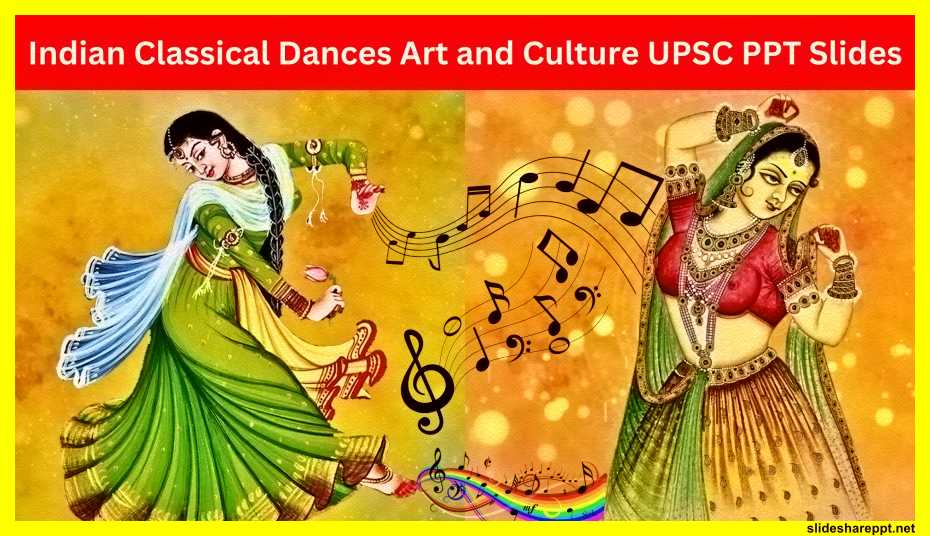
Table of Indian Classical and Folk Dances
Indian classical dances are diverse and rich forms of traditional dance that have evolved over centuries.
Here’s a complete table summarizing Indian Classical and Folk Dances based on the information provided:
| Dance Form | Region of Origin | Key Features |
|---|---|---|
| Bharatanatyam | Tamil Nadu | Solo dance, precise footwork, intricate gestures |
| Kathak | Northern India | Storytelling, emphasis on footwork, facial expressions |
| Kathakali | Kerala | Elaborate makeup, colorful costumes, storytelling |
| Odissi | Odisha | Graceful movements, storytelling, sculptural poses |
| Kuchipudi | Andhra Pradesh | Dynamic footwork, dance-drama, Krishna-oriented |
| Manipuri | Manipur | Fluid movements, storytelling, Raslila performances |
| Mohiniyattam | Kerala | Graceful, feminine, storytelling through Abhinaya |
| Sattriya | Assam | Dance-drama, Vaishnavism themes, monastic origins |
| Kathakarí | Karnataka | The narrative dance form, incorporates storytelling |
| Chhau | Eastern India | Martial arts elements, vibrant costumes, storytelling |
| Yakshagana | Karnataka, Kerala | Traditional theatre, dance, music, unique storytelling |
| Bhavageet | Karnataka | Expressive dance form, conveys emotions through movements |
| Vilasini Natyam | Andhra Pradesh | Temple dance, similar to Bharatanatyam |
| Garba | Gujarat | Traditional folk dance, circular formations, lively music |
| Lavani | Maharashtra | Folk dance, energetic and sensuous movements |
| Bihu | Assam | Celebratory dance, associated with the Bihu festival |
| Gotipua | Odisha | Boy dancers performing feminine dance movements |
| Perini Tandavam | Telangana | Ancient dance form, revived in recent times, martial elements |
| Dollu Kunitha | Karnataka | Drum dance, performed during festivals and celebrations |
| Dandiya Raas | Gujarat, Rajasthan | Traditional folk dance, associated with Navratri |
| Siddi, Tappeta Gundlu, Urumulu | Andhra Pradesh | Various folk dance forms in Andhra Pradesh |
| Ponung, Sadinuktso, Khampti | Arunachal Pradesh | Traditional ethnic art forms |
| Dhuliya, Bhawariya, Deodhani | Assam | Traditional folk dances in Assam |
| Mussoll, Dulpod, Kunnbi-Geet | Goa | Traditional folk dances in Goa |
| Rasleela, Phag Dance, Daph Dance | Haryana | Folk dances in Haryana |
| Chamba, Dalshone, Cholamba | Himachal Pradesh | Traditional folk dances in Himachal Pradesh |
| Veeragase, Karaga, Yakshagana | Karnataka | Various folk and traditional dances in Karnataka |
| Thirayattam, Padayani, Theyyam | Kerala | Traditional ritualistic art forms in Kerala |
| Gaur, Muriya, Saila, Kaksar | Madhya Pradesh | Various folk dances in Madhya Pradesh |
| Lie Haraoba Dance, Chanlam | Manipur | Traditional dance forms in Manipur |
| Wiking, Pombalang Nongkrem | Meghalaya | Traditional dance forms in Meghalaya |
| Chau, Naga, Ghumri | Odisha | Traditional dance forms in Odisha |
| Kikri, Sammi, Jhumar, Karthi | Punjab | Traditional folk dances in Punjab |
| Banjaara, Fire dance, Tera tali | Rajasthan | Traditional folk dances in Rajasthan |
| Pang Toed Chaam, Maruni | Sikkim | Traditional dance forms in Sikkim |
| Karakam, Kummi, Kavadi, Kolattam | Tamil Nadu | Traditional folk dances in Tamil Nadu |
| Chau, Santari, Jatra, Gazan | West Bengal | Traditional dance forms in West Bengal |
| Contemporary Dance | Pan-India | Fusion of classical, folk, and Western forms |
| Dance in Films – Bollywood | Pan-India | Incorporates various dance styles, cinematic performances |
| Dance Education | Pan-India | Schools offering lessons in classical and folk dances |
| Geographic Spread | Pan-India, South Asia | Indian classical dance practiced across the subcontinent |
Note: The table is a summary based on the provided information and may not be exhaustive. There are additional folk and tribal dance forms in each state and region not explicitly mentioned in the provided content.
Conclusion:
- Indian classical dances serve as a cultural mirror, reflecting the depth and diversity of the country’s heritage. From the ancient scriptures and temple traditions to the modern stage and cinema, these dances have endured, captivating audiences worldwide. As India strides into the future, its classical and folk dances remain timeless, bridging the gap between tradition and modernity, and weaving a narrative that echoes the soul of the nation.
Also read: Indian Music Art and Culture UPSC PPT Slides (Complete)