International Environmental Conventions UPSC
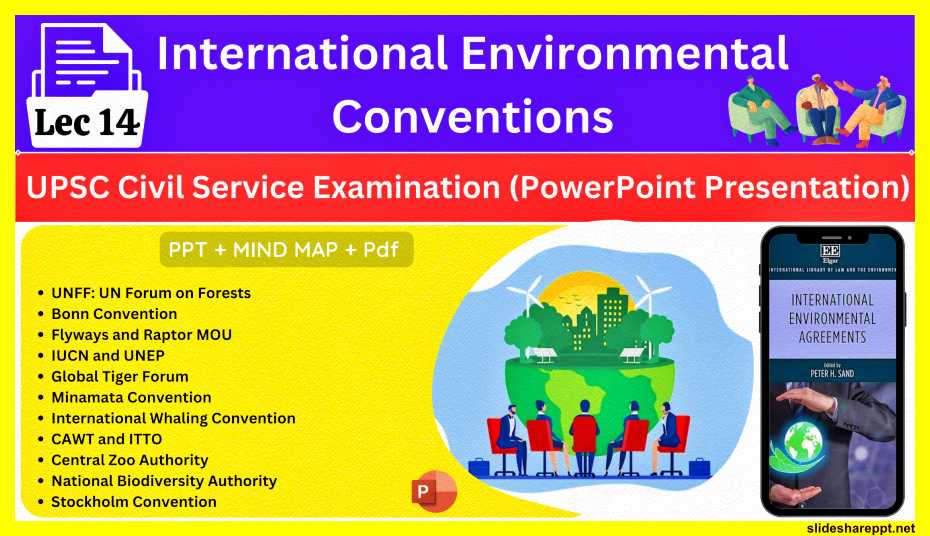
Today we have shared the Notes related to International Environmental Conventions UPSC Notes PPT, UPSC PDF Download, The global community faces unprecedented environmental challenges that demand collective action. To address these issues that transcend national boundaries, a multitude of international environmental conventions have been established, fostering collaboration and commitment to safeguarding the planet. In this article, we will explore the key features and contributions of some prominent international environmental conventions.
International Environmental Conventions
(UPSC – Lec 14)
Note:-
- If you are viewing this PPT on your phone, please make it full screen and then view it. (Press: 3 dots in PPT, then Full Screen)
- If you have a problem while clicking on next, (Just tap) on the slide instead of clicking Next Botton.
- FOR A BETTER VIEW PRESS Ctrl + Shift + F ON A PC OR LAPTOP.
- Whatever is written in the PPT is different and whatever is written below is different.
UPSC Prelims PPT Bundle Product Details
(BUY ONLINE)
| Placement / Section | Details / Click To Action Text |
|---|---|
| Title | UPSC Prelims PPT Notes (BUNDLE) |
| Number of PPTs / Slides | 160+ PPTs |
| Delivery Method | Instant Access after Payment (Google Drive Folder) |
| Additional Info | Full UPSC Prelims Coverage, Study-Friendly PPT Format |
| Copyright / Ownership | Self-made Notes (slideshareppt.net) |
| Payment | Online Gateway – QR, CREDIT CARD, UPI etc… |
| Pricing / Purchase CTA |
Check Price & Buy (Redirects to Pricing Page) |
| Demo Link | View Sample Slides (Click to Open Demo) |
The international community has recognized the urgent need for concerted efforts to address environmental challenges that transcend national boundaries. A multitude of international environmental conventions have been established to foster cooperation among nations, aiming to protect our planet’s biodiversity and natural resources. In this comprehensive article, we will delve into several key conventions and organizations that play pivotal roles in global environmental conservation.
BRS Conventions
| International Environmental Conventions | Key Features |
|---|---|
| BRS Conventions | |
| Basel Convention | Control and transboundary movement of hazardous wastes; aims to minimize waste generation and ensure sound management. |
| Rotterdam Convention | Focuses on prior informed consent for hazardous chemicals and pesticides in international trade. |
| Stockholm Convention | Targets persistent organic pollutants (POPs) harmful to human health and the environment. |
| Triple COP | Simultaneous meetings of parties to the Basel, Rotterdam, and Stockholm Conventions for coordinated action. |
| CITES | |
| Management Authority in India | Director of Wildlife Preservation, MoEFCC. |
| Competent Authorities for Permits | Wildlife Crime Control Bureau (WCCB). |
| Scientific Authorities | Zoological Survey of India, Botanical Survey of India, Wildlife Institute of India, etc. |
Basel Convention
- The Basel Convention, initiated in 1989, addresses the control and transboundary movements of hazardous wastes. It aims to minimize the generation of such wastes and ensure their environmentally sound management.
Rotterdam Convention
- The Rotterdam Convention, established in 1998, focuses on the prior informed consent procedure for certain hazardous chemicals and pesticides in international trade.
Stockholm Convention
- The Stockholm Convention, in force since 2004, targets persistent organic pollutants (POPs) that pose threats to human health and the environment.
Triple COP
- The Triple COP refers to the simultaneous meetings of the parties to the Basel, Rotterdam, and Stockholm Conventions. This innovative approach enhances coordination in addressing diverse environmental challenges.
CITES: Safeguarding Wildlife Through International Cooperation
The Convention on International Trade in Endangered Species of Wild Fauna and Flora (CITES) plays a crucial role in protecting endangered species. In India, the Director of Wildlife Preservation, Ministry of Environment, Forest and Climate Change (MoEFCC), serves as the Management Authority. Other competent bodies, such as the Wildlife Crime Control Bureau (WCCB), are authorized to grant permits. Scientific Authorities include the Zoological Survey of India, the Botanical Survey of India, and the Wildlife Institute of India.
The International Consortium on Combating Wildlife Crime
| The International Consortium on Combating Wildlife Crime | |
| TRAFFIC | Monitors wildlife trade to ensure it doesn’t threaten conservation efforts. |
| UNFF: UN Forum on Forests | Addresses global forest-related issues, promoting sustainable forest management and conservation. |
| Bonn Convention | CMS focuses on the conservation of migratory species of wild animals. |
| Flyways and Raptor MOU | Dedicated to conserving migratory bird species and birds of prey. |
| IUCN | International Union for Conservation of Nature; provides expertise in global conservation efforts. |
| UNEP | United Nations Environment Programme; contributes to global environmental governance. |
| Global Tiger Forum | Aims to promote and facilitate the conservation of tigers as flagship species. |
| Minamata Convention | Addresses mercury emissions to protect human health and the environment. |
| International Whaling Convention | Regulates whaling to ensure sustainability and prevent depletion of whale populations. |
| CAWT | Cooperative for Assistance and Relief Everywhere (CARE) Wildlife Trust contributes to environmental conservation. |
| ITTO | International Tropical Timber Organization contributes to sustainable timber management. |
TRAFFIC
TRAFFIC, the wildlife trade monitoring network, is an integral part of the International Consortium. It works to ensure that trade in wild plants and animals is not a threat to the conservation of nature.
UNFF: UN Forum on Forests
The UN Forum on Forests addresses global forest-related issues, aiming to promote sustainable forest management and conservation.
Bonn Convention
The Bonn Convention, also known as the Convention on the Conservation of Migratory Species of Wild Animals (CMS), focuses on protecting migratory species throughout their range.
Flyways and Raptor MOU
Flyways are migratory routes used by birds, and the Raptor MOU is a specialized agreement under CMS dedicated to the conservation of birds of prey.
IUCN and UNEP
The International Union for Conservation of Nature (IUCN) and the United Nations Environment Programme (UNEP) play crucial roles in global environmental governance, providing expertise and coordination.
Global Tiger Forum
The Global Tiger Forum aims to promote and facilitate the conservation of tigers, recognizing their importance as flagship species for biodiversity conservation.
Minamata Convention
The Minamata Convention addresses mercury emissions and aims to protect human health and the environment from the adverse effects of mercury.
International Whaling Convention
This convention regulates the hunting of whales to ensure sustainable practices and prevent the depletion of whale populations.
CAWT and ITTO
The Cooperative for Assistance and Relief Everywhere (CARE) Wildlife Trust (CAWT) and the International Tropical Timber Organization (ITTO) contribute to environmental conservation through various initiatives.
Environmental Organizations in India
| Environmental Organizations in India | Key Responsibilities |
|---|---|
| NBWL – National Board for Wildlife | Advises the Government on wildlife-related matters for the conservation and protection of biodiversity. |
| National Tiger Conservation Authority | Implements policies and strategies for tiger conservation in India. |
| WCCB Initiatives | Undertakes various initiatives to combat wildlife crime in India. |
| Animal Welfare Board and Animal Welfare Board of India | Focus on animal welfare, ensuring ethical treatment, and preventing cruelty. |
| Central Zoo Authority | Regulates zoos in India to ensure the welfare of captive animals and promote conservation. |
| National Biodiversity Authority | Implements the Biological Diversity Act, conserving biodiversity and promoting sustainable use. |
| Forest Survey of India and Botanical Survey of India | Contribute to forest and botanical research, providing valuable data for conservation efforts. |
| Zoological Survey of India | Focuses on the survey and exploration of India’s faunal diversity, contributing to biodiversity conservation. |
| Central Ground Water Authority | Addresses groundwater-related issues, playing a crucial role in sustainable water resource management. |
This table provides a concise overview of the key features and responsibilities of each international environmental convention and environmental organization in India.
NBWL: National Board for Wildlife
The NBWL is a statutory organization that advises the Government of India on wildlife-related matters, ensuring the conservation and protection of biodiversity.
National Tiger Conservation Authority
Established to strengthen tiger conservation efforts, this authority plays a crucial role in implementing policies and strategies for tiger conservation.
WCCB Initiatives
The Wildlife Crime Control Bureau (WCCB) in India undertakes various initiatives to combat wildlife crime, employing modern techniques and collaborations.
Animal Welfare Board and Animal Welfare Board of India
These boards focus on animal welfare, ensuring the ethical treatment of animals and preventing cruelty.
Central Zoo Authority
Responsible for regulating zoos in India, the Central Zoo Authority ensures the welfare of captive animals and promotes conservation.
National Biodiversity Authority
The NBA plays a pivotal role in implementing India’s Biological Diversity Act, conserving biological diversity, and promoting sustainable use.
Forest Survey of India and Botanical Survey of India
These organizations contribute to forest and botanical research, providing valuable data for conservation efforts.
Zoological Survey of India
The Zoological Survey of India focuses on the survey and exploration of the country’s faunal diversity, contributing to biodiversity conservation.
Central Ground Water Authority
Addressing groundwater-related issues, this authority plays a crucial role in sustainable water resource management.
Conclusion
- The plethora of international environmental conventions and the active participation of organizations in India underline the global commitment to environmental conservation. As nations collaborate and work towards common goals, the hope is that these efforts will contribute to a sustainable and harmonious coexistence between humanity and the natural world.
Previous Post: Carbon Sequestration and Climate Finance