Post Mauryan Art and Architecture PPT Download
Today we will share the Complete Notes related to the Post Mauryan Art and Architecture PPT Download and UPSC PDF Download, The decline of the Mauryan Empire marked the beginning of a new era in Indian history, characterized by the rise of various regional powers and the emergence of distinct artistic and architectural traditions. The post-Mauryan period, spanning from the 2nd century BCE to the 3rd century CE, witnessed the blossoming of diverse artistic styles and the construction of monumental structures that reflected the cultural richness of the subcontinent.
Table of Contents
Post Mauryan Art and Architecture PPT Download
(Lec 3)
Note:-
- If you are viewing this PPT on your phone, please make it full screen and then view it. (Press: 3 dots in PPT, then Full Screen)
- If you have a problem while clicking on next, (Just tap) on the slide instead of clicking Next Botton.
- FOR A BETTER VIEW PRESS Ctrl + Shift + F ON A PC OR LAPTOP.
- Whatever is written in the PPT is different and whatever is written below is different.
UPSC Prelims PPT Bundle Product Details
(BUY ONLINE)
| Placement / Section | Details / Click To Action Text |
|---|---|
| Title | UPSC Prelims PPT Notes (BUNDLE) |
| Number of PPTs / Slides | 160+ PPTs |
| Delivery Method | Instant Access after Payment (Google Drive Folder) |
| Additional Info | Full UPSC Prelims Coverage, Study-Friendly PPT Format |
| Copyright / Ownership | Self-made Notes (slideshareppt.net) |
| Payment | Online Gateway – QR, CREDIT CARD, UPI etc… |
| Pricing / Purchase CTA |
Check Price & Buy (Redirects to Pricing Page) |
| Demo Link | View Sample Slides (Click to Open Demo) |
Post-Mauryan Art and Architecture
Post-Mauryan art and architecture refers to the artistic and architectural developments that took place in the Indian subcontinent after the decline of the Mauryan Empire, which ruled from around 322 BCE to 185 BCE. The period following the Mauryan Empire witnessed the rise of various regional dynasties and their unique contributions to art and architecture. Here are some key features of Post-Mauryan art and architecture:
1. Satavahana Dynasty:
- The Satavahanas were one of the prominent post-Mauryan dynasties. They ruled in the Deccan region and played a crucial role in the development of art and architecture.
- The Amaravati Stupa, an important Buddhist monument, is associated with the Satavahana period. It features intricate carvings and relief work depicting scenes from the life of Buddha.
Here’s a comprehensive table providing information about the Satavahana Dynasty:
| Aspect | Details |
|---|---|
| Dynasty Name | Satavahana Dynasty |
| Time Period | 230 BCE to 220 CE |
| Geographical Extent | Deccan region of the Indian subcontinent |
| Capital | Pratishthana (modern-day Paithan in Maharashtra) |
| Founder | Simuka |
| Prominent Rulers | Gautamiputra Satakarni, Vasisthiputra Pulumavi |
| Political System | Monarchy |
| Economic Prosperity | Flourishing trade, particularly with the Roman Empire |
| Religious Patronage | Supportive of Hinduism and Buddhism |
| Art and Architecture | Contributed to the development of Amaravati Stupa |
| Notable Achievements | Maintained regional stability and prosperity |
| Established maritime trade connections | |
| Patronage of art and culture | |
| Decline | Around 220 CE, possibly due to internal conflicts |
| Legacy | Cultural influence on subsequent Deccan dynasties |
| – Contributions to regional art and architecture | |
| Influence on trade and commerce in the Deccan |
This table provides a concise overview of key aspects of the Satavahana Dynasty, including its time period, geographical extent, rulers, political system, economic activities, religious patronage, contributions to art and architecture, notable achievements, decline, and legacy.
2. Shunga Dynasty:
- The Shungas succeeded the Mauryas and played a significant role in the revival of Indian art.
- The Great Stupa at Sanchi was expanded and renovated during the Shunga period. The stupa is an important Buddhist monument adorned with elaborate gateways (toranas) featuring intricate carvings.
Here’s a comprehensive table providing information about the Shunga Dynasty:
| Aspect | Details |
|---|---|
| Dynasty Name | Shunga Dynasty |
| Time Period | 185 BCE to 73 BCE |
| Geographical Extent | Northern and Central India |
| Capital | Pataliputra (modern-day Patna) |
| Founder | Pushyamitra Shunga |
| Prominent Rulers | Pushyamitra Shunga, Agnimitra, Bhagabhadra |
| Political System | Monarchy |
| Economic Activities | Agricultural-based economy, trade and commerce |
| Religious Patronage | Initially, a shift toward Brahmanism; later tolerant of Buddhism |
| Art and Architecture | Renovated and expanded the Great Stupa at Sanchi |
| Notable Achievements | Suppressed the Mauryan remnants |
| Contributed to the development of art and literature | |
| Cultural assimilation with Greek influences | |
| Decline | Around 73 BCE, possibly due to external invasions |
| Legacy | Transition from the Mauryan to the Shunga period |
| Influence on subsequent dynasties in the region | |
| Contributions to the artistic and cultural heritage |
This table provides a concise overview of key aspects of the Shunga Dynasty, including its time period, geographical extent, rulers, political system, economic activities, religious patronage, contributions to art and architecture, notable achievements, decline, and legacy.
3. Bharhut Stupa:
- The Bharhut Stupa, located in Madhya Pradesh, is another important Buddhist stupa believed to belong to the Shunga period. It features a railing with sculpted panels depicting stories related to Buddha’s life.
- The Bharhut Stupa is a significant Buddhist monument located in the Satna district of Madhya Pradesh, India. It dates back to the post-Mauryan period, particularly the Shunga dynasty, and is an important archaeological site that provides insights into the development of Buddhist art and architecture during that time.
Here’s a detailed overview of the Bharhut Stupa:
| Aspect | Details |
|---|---|
| Location | Bharhut, Satna district, Madhya Pradesh, India |
| Time Period | 2nd century BCE (Shunga period) |
| Purpose | Buddhist religious monument and stupa |
| Architectural Style | Early Stupa Architecture |
| Material Used | Stone and brick |
| Significance | 1. Represents the early development of Buddhist art and architecture. |
| 2. Features one of the earliest known depictions of the Buddha. | |
| 3. Provides insights into the symbolism and narratives of Buddhist teachings. | |
| Architectural Features | 1. Railings (Vedika): Adorned with intricate carvings depicting Jataka tales and scenes from Buddha’s life. |
| 2. Toranas (Gateways): Elaborate gateways featuring sculpted panels with narrative reliefs. | |
| 3. Yaksha and Yakshi Figures: Decorative sculptures of mythical beings. | |
| Inscriptions | The stupa features inscriptions that provide valuable information about its construction, donors, and religious dedications. |
| Rediscovery | Discovered in the 19th century by British archaeologist Alexander Cunningham. Subsequent excavations revealed the site’s significance. |
| Current Status | The original Bharhut Stupa’s railings and sculptures are preserved in the Indian Museum, Kolkata, and the National Museum, New Delhi. Replicas are placed at the site. |
| Legacy | 1. The Bharhut Stupa is considered a key example of early Indian Buddhist art. |
| 2. It influenced the development of later Buddhist art and stupa architecture. | |
| 3. The narrative reliefs on the railings contribute to the understanding of early Buddhist stories and iconography. |
The Bharhut Stupa, with its rich sculptural decorations and historical significance, stands as a testament to the flourishing Buddhist culture during the Shunga period and its lasting impact on the artistic and religious heritage of India.
4. Gandhara Art:
- In the northwestern regions of the Indian subcontinent, the Gandhara school of art emerged. It was influenced by Hellenistic and Roman artistic styles due to the region’s contact with the Greek world through the campaigns of Alexander the Great.
- Gandhara art is characterized by the depiction of Buddha in human form, often with Greek-influenced features.
Here’s a comprehensive table providing information about Gandhara Art:
| Aspect | Details |
|---|---|
| Location | Gandhara region, spanning parts of present-day Afghanistan and Pakistan |
| Time Period | 1st to 5th centuries CE |
| Dynasty Influence | Kushan Dynasty (prominent during the Gandhara art period) |
| Influences | Hellenistic, Roman, and Indian cultural elements |
| Main Artistic Medium | Grey schist stone (known for its fine grain and durability) |
| Depictions of Buddha | Human form with Greco-Roman features |
| Wavy hair, toga-like robe, classical poses | |
| Other Figures | Bodhisattvas, Greek mythological figures, deities |
| Material and Technique | Sculptures mainly carved in grey schist stone |
| Fine detailing in relief sculptures and friezes | |
| Architectural Contributions | Decoration of Buddhist stupas and monastic complexes |
| Major Sites | Taxila: Numerous examples of sculptures and architectural elements |
| Bamiyan: Giant Buddha sculptures (tragically destroyed) | |
| Iconography | Depictions of Buddha’s life, Jataka tales, and religious narratives |
| Cultural Exchange | Reflects interactions along the Silk Road |
| Legacy | Enduring impact on subsequent art in South Asia, Central Asia, and beyond |
| Highlights the convergence of diverse cultural influences | |
| Artistic Style | Fusion of Greek-Roman and Indian artistic elements |
| Unique representation of Buddha and other religious figures | |
| Historical Context | Flourished during the rule of the Kushan Dynasty |
| Represents a period of cultural and artistic dynamism in the region |
This table provides a detailed overview of key aspects of Gandhara Art, including its geographical context, time period, influences, artistic medium, depictions, major sites, legacy, and historical context. Gandhara Art remains a significant cultural and artistic phenomenon that reflects the rich tapestry of interactions in ancient South Asia.
5. Mathura School of Art:
- The Mathura school centered around the city of Mathura in northern India, produced sculptures primarily in red sandstone.
- It focused on depicting the life of Buddha, as well as other deities and mythological themes.
Here’s a comprehensive table providing information about the Mathura School of Art:
| Aspect | Details |
|---|---|
| Location | Mathura, in northern India |
| Time Period | 2nd century BCE to 12th century CE |
| Significance | One of the major art schools of ancient India, known for its contributions to sculpture and art |
| Material Used | Mainly red sandstone, although other materials were also used |
| Religious Focus | Primarily associated with Hindu and Jain religious themes |
| Subjects of Sculptures | Hindu deities, especially various forms of Lord Vishnu and Lord Shiva |
| Jain Tirthankaras and other figures from Jain mythology | |
| Scenes from daily life and secular themes | |
| Iconography | Hindu sculptures depict deities with attributes and symbols, showcasing their specific roles and stories |
| Jain sculptures represent the 24 Tirthankaras, often identifiable by specific symbols | |
| Characteristics | Elaborate ornamentation and detailing in sculptures |
| Emphasis on capturing divine attributes and expressions | |
| The harmonious portrayal of the human and divine forms | |
| Notable Sites | Kankali Tila: An ancient mound in Mathura with remains of the ancient city |
| Govardhan Hill: Associated with legends of Lord Krishna | |
| Influence on Art | Influenced by earlier Mauryan and Shunga art traditions |
| Contributed to the development of Gupta and later North Indian art styles | |
| Historical Context | Flourished during the post-Mauryan and early medieval periods |
| Mathura was a major cultural and religious center in ancient India | |
| Legacy | Contributions to the development of North Indian sculpture and art |
| Influence on later artistic traditions in the region | |
| Rediscovery | Rediscovered through archaeological excavations in Mathura and surrounding areas |
| Sculptures and artifacts from the Mathura School are now displayed in various museums |
This table provides a detailed overview of key aspects of the Mathura School of Art, including its location, time period, significance, artistic characteristics, notable sites, historical context, and legacy. The Mathura School remains a crucial chapter in the history of Indian art, contributing to the rich cultural heritage of the subcontinent.
6. Cave Architecture:
- The tradition of rock-cut caves continued, with notable examples like the Karla Caves and Bhaja Caves in Maharashtra.
- The Ajanta Caves, a UNESCO World Heritage Site, represent a significant development in Buddhist rock-cut architecture. These caves feature exquisite paintings and sculptures depicting Jataka tales and the life of Buddha.
Here’s a comprehensive table providing information about Cave Architecture in India:
| Aspect | Details |
|---|---|
| Definition | Architectural structures carved into natural rock formations, serving various purposes including religious worship, meditation, and residence |
| Time Period | Varied, ranging from ancient to medieval periods |
| Geographical Distribution | Found across India, with notable clusters in regions such as Maharashtra, Karnataka, Andhra Pradesh, and Uttar Pradesh |
| Religious Affiliation | Primarily associated with Buddhism, Hinduism, and Jainism |
| Materials Used | Excavation and carving done on existing rock formations |
| Decorative elements and sculptures are often carved from the same rock | |
| Types of Caves | Buddhist Caves: Designed for monastic activities, adorned with sculptures and paintings depicting Buddhist themes. Examples include Ajanta and Ellora Caves. |
| Hindu Caves: Dedicated to Hindu deities, particularly Shiva and Vishnu. Notable examples include the Elephanta Caves and the Badami Cave Temples. | |
| Jain Caves: Carved for Jain monks, featuring sculptures of Tirthankaras. Locations include the Udayagiri and Khandagiri Caves. | |
| Architectural Features | Elaborate facades with intricate carvings and sculptures |
| Pillared halls and chambers for worship and meditation | |
| Intricate rock-cut pillars, often imitating structural elements of wooden architecture | |
| Paintings and Sculptures | Ajanta Caves: Known for exquisite murals depicting Jataka tales and scenes from the life of Buddha. |
| Ellora Caves: Showcase a blend of Hindu, Buddhist, and Jain themes in sculptures and reliefs. | |
| Bagh Caves: Feature ancient Indian art, including paintings and sculptures. | |
| Influence on Art and Culture | Cave architecture influenced the development of regional art styles. |
| Paintings and sculptures in caves served as important sources for the study of ancient Indian art and iconography. | |
| Historical Significance | Reflects the religious and cultural diversity of ancient India. |
| Represents a significant chapter in the history of Indian architecture and artistic expression. | |
| Preservation Efforts | Various caves are protected as UNESCO World Heritage Sites. |
| Conservation and restoration projects are undertaken to preserve the integrity of the rock-cut structures. | |
| Examples | Ajanta Caves (Maharashtra), Ellora Caves (Maharashtra), Elephanta Caves (Maharashtra), Badami Cave Temples (Karnataka), Udayagiri and Khandagiri Caves (Odisha), Bagh Caves (Madhya Pradesh), and many more. |
This table provides a detailed overview of key aspects related to Cave Architecture in India, encompassing different religions, types of caves, architectural features, artistic elements, historical significance, and preservation efforts. Cave architecture stands as a testament to the rich cultural and religious history of the Indian subcontinent.
7. Nagara and Dravida Architectural Styles:
- The post-Mauryan period saw the continued development of two major architectural styles: Nagara in the north and Dravida in the south.
- Nagara style is characterized by a curvilinear tower (shikhara) on the main temple, while Dravida style is known for its pyramidal vimana and intricate sculptures.
Here’s a comprehensive table providing information about the Nagara and Dravida Architectural Styles in Indian temple architecture:
| Aspect | Nagara Architectural Style | Dravida Architectural Style |
|---|---|---|
| Geographical Distribution | Mainly in Northern India and parts of Central India | Predominantly in Southern India and some parts of Central India |
| Time Period | Flourished from around the 5th to 16th centuries CE | Flourished from around the 6th century onwards, continuing into the medieval period |
| Main Characteristics | Tower (Shikhara) is curvilinear and consists of multiple layers (called ‘bhadras’). Amalaka (a stone disk) crowns the top. Central sanctum with a vestibule (antarala). Mandapa (hall) for gatherings and rituals. Decorative elements like projections (angas) and miniature shrines. | The tower (Vimana) is pyramidal with horizontal levels (tala). Kalasha (ornamental pot) crowns the top. The central sanctum is typically larger, with an elaborate tower. Hall (mandapa) often has a raised platform. Pillars with intricate carvings and sculptures. |
| Pillar Types | Square pillars with minimal carvings. The shaft is often plain. Capitals are plain or minimally adorned. | Square or octagonal pillars with extensive carvings. The shaft is often intricately carved with reliefs. Capitals are richly decorated with sculptures. |
| Temples as Examples | Kandariya Mahadeva Temple in Khajuraho, Madhya Pradesh. Lingaraja Temple in Bhubaneswar, Odisha. Jagannath Temple in Puri, Odisha. | Brihadeshwara Temple in Thanjavur, Tamil Nadu. Meenakshi Amman Temple in Madurai, Tamil Nadu. Virupaksha Temple in Hampi, Karnataka. |
| Deities Worshiped | Mainly dedicated to a variety of deities, including Shiva, Vishnu, and Devi. Varied based on the specific temple. | Predominantly dedicated to Lord Shiva (Shiva temples). Also Vishnu and Devi temples in this style. |
| Example of Regional Influence | The North Indian Nagara style has variants like the Orissan style with additional spires called ‘Rekha deula’. | Southern Dravida style has variants like the Chalukyan style, with different tower proportions. |
| Symbolic Elements | Emphasis on the vertical rise of the tower towards the sky. Symbolizes the cosmic axis and the abode of the divine. | Emphasis on horizontal lines, representing the Earth. Symbolizes the earthly presence of the divine. |
| Evolution Over Time | Underwent various regional adaptations and stylistic changes over centuries. | Continued to evolve with the Vijayanagara and Nayaka periods introducing further variations. |
| Cultural Influence | Reflects the diverse cultural and artistic heritage of North India. Absorption of foreign influences during various historical periods. | Reflects the distinctive cultural and artistic traditions of South India. Emphasis on continuity with ancient Dravidian architecture. |
| Preservation Efforts | Many temples in Nagara style are UNESCO World Heritage Sites, prompting conservation efforts. | Conservation projects for Dravida temples aim to protect intricate carvings and maintain structural integrity. |
This table provides a detailed comparison between the Nagara and Dravida architectural styles, encompassing their geographical distribution, key characteristics, examples, symbolic elements, and cultural influences. These styles have significantly contributed to the diversity and richness of Indian temple architecture.
8. Sculpture and Iconography:
- Sculptures from this period continued to evolve, with an emphasis on expressing religious themes and narratives.
- The iconography of Hindu and Buddhist deities became more elaborate, with attention to symbolic details and mudras (hand gestures).
Here’s a comprehensive table providing information about Sculpture and Iconography:
| Aspect | Details |
|---|---|
| Definition | Sculpture: The art of creating three-dimensional forms or figures, typically by carving, modeling, or casting.
Iconography: The study and interpretation of symbols, themes, and subject matter in art. |
| Purpose | Sculpture: Depiction of deities, historical figures, mythological scenes, and narratives.
Iconography: Communicating religious, cultural, or symbolic meanings through visual representation. |
| Materials Used | Sculpture: Varied materials, including stone, metal, wood, terracotta, and more.
Iconography: Utilizes diverse artistic mediums, such as paintings, sculptures, and reliefs. |
| Time Period | Sculpture: Prehistoric periods to contemporary times, with distinctive styles in each era.
Iconography: Since ancient times, it has evolved across different civilizations and religious traditions. |
| Cultural Context | Sculpture: Reflects cultural, religious, and societal beliefs of a particular time and region.
Iconography: Embedded in religious and cultural contexts, often serving as a visual language for specific traditions. |
| Techniques | Sculpture: Carving, modeling, casting, and various sculpting techniques.
Iconography: Involves the analysis of symbols, motifs, and visual elements to understand their meanings. |
| Styles and Movements | Sculpture: Varied styles like classical, medieval, Renaissance, modern, and contemporary art movements.
Iconography: Different styles emerge based on cultural and religious contexts, adapting to evolving traditions. |
| Subjects Represented | Sculpture: Depictions of gods, goddesses, rulers, mythological scenes, everyday life, and more.
Iconography: Representation of religious deities, saints, symbols, and narratives specific to a particular faith or tradition. |
| Cultural Contributions | Sculpture: Contributions to the aesthetic and artistic heritage of civilizations, preserving cultural narratives.
Iconography: Essential in preserving and transmitting religious and cultural knowledge, aiding in worship and storytelling. |
| Notable Examples | Sculpture: Venus de Milo, Michelangelo’s David, Terracotta Army.
Iconography: Christian religious icons, Hindu gods and goddesses in temple art, Buddhist symbols like the Dharmachakra. |
| Evolution Over Time | Sculpture: Evolves through different artistic movements, adapting to changing societal norms and values.
Iconography: Changes with the evolution of religious beliefs, incorporating new symbols and interpretations. |
| Influence on Architecture | Sculpture: Often integrated into architectural elements, enhancing the visual appeal of structures.
Iconography: Plays a crucial role in the ornamentation of religious buildings, influencing the overall design and atmosphere. |
| Modern Applications | Sculpture: Contemporary artists explore diverse materials, concepts, and styles, pushing boundaries in art.
Iconography: Continues to be relevant in religious art, and contemporary artists incorporate symbolic elements in various forms. |
| Interdisciplinary Nature | Sculpture: Intersects with various art forms, including painting, architecture, and installation art.
Iconography: Interdisciplinary field involving art history, religious studies, and cultural anthropology. |
This table provides a detailed overview of key aspects related to Sculpture and Iconography, covering their definitions, purposes, materials, cultural contexts, techniques, styles, subjects, contributions, notable examples, evolution, influence on architecture, modern applications, and interdisciplinary nature.
The Post-Mauryan period laid the foundation for diverse regional art and architectural styles that continued to evolve over the centuries, contributing to the rich cultural heritage of India.
Post-Mauryan Art and Architecture: An Exploration of Diverse Expressions
The decline of the Mauryan Empire marked the onset of a period of disintegration and regionalization in the Indian subcontinent. Various dynasties emerged across the northern, southern, and western regions, each contributing distinctively to the realms of art and architecture. Among the notable post-Mauryan dynasties were the Shungas, Kanvas, Kushanas, and Shakas in the north, while the south and west witnessed the rule of Satavahanas, Ikshavakus, Abhiras, and Vakatakas.
Rock-Cut Caves
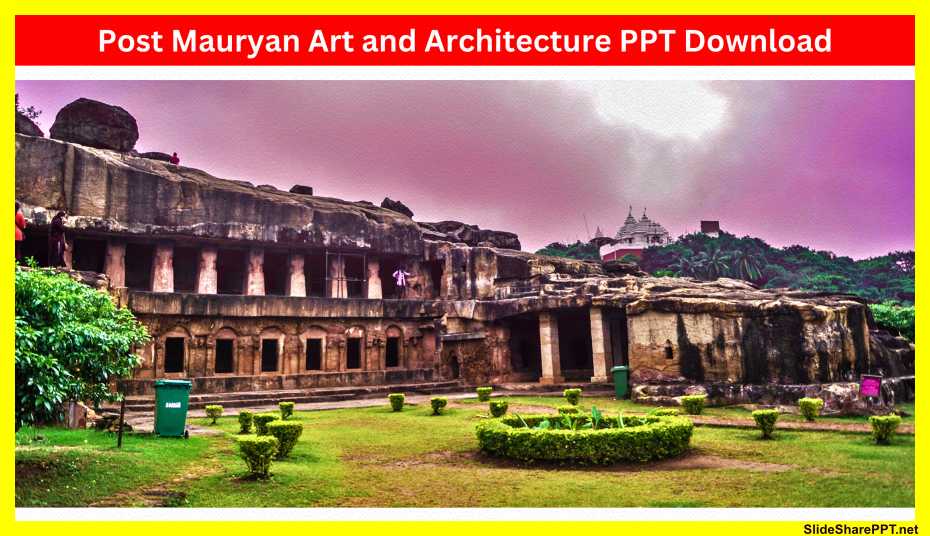
A remarkable facet of post-Mauryan art is the proliferation of rock-cut caves, serving both religious and residential purposes. Notable examples include the Udaygiri and Khandgiri Caves in Odisha, showcasing intricate carvings and inscriptions. Maharashtra boasts the Karle Caves, Junar Caves, Bedsa, and Kondana Caves, as well as the Pitalkhora Caves and Pandav Leni Jain Caves, each reflecting regional influences and architectural innovations.
Here’s a comprehensive table providing information about Rock-Cut Caves:
| Aspect | Details |
|---|---|
| Definition | Architectural structures are carved directly into natural rock formations, creating caves for various purposes. |
| Time Period | Varied, ranging from ancient to medieval periods |
| Geographical Distribution | Found in different parts of the world, with significant examples in India, China, Egypt, and other regions. |
| Purpose | Religious worship and meditation.- Residential quarters for monks or religious practitioners.
Secular use as shelters, storage, or other functional spaces. |
| Materials Used | Mainly the existing rock formations (limestone, sandstone, granite) at the site.
Some caves may have additional construction using stones or bricks for facades and entrances. |
| Construction Techniques | Excavation: Carving out the rock to create chambers, halls, and other architectural features.
Sculpting: Adding detailed carvings, reliefs, and sculptures within the caves. |
| Types of Rock-Cut Caves | Buddhist Caves: Used for meditation and worship. Examples include Ajanta and Ellora Caves in India.
Hindu Caves: Dedicated to Hindu deities, featuring elaborate sculptures and reliefs. Examples include the Elephanta Caves. Jain Caves: Associated with Jain monks, showcasing Tirthankara sculptures. Examples include Udayagiri and Khandagiri Caves. |
| Architectural Features | Pillared halls, chambers, sanctuaries, and vestibules.
Elaborate facades with intricate carvings and sculptures. Rock-cut pillars, often imitating structural elements of wooden architecture. |
| Paintings and Sculptures | Ajanta Caves: Known for exquisite murals depicting Jataka tales and scenes from the life of Buddha.
Ellora Caves: Showcase a blend of Hindu, Buddhist, and Jain themes in sculptures and reliefs. Badami Cave Temples: Feature sculptures of Hindu deities and intricate carvings. |
| Symbolism and Iconography | Depicts religious narratives, stories from epics, and symbols associated with the respective faiths.
Represents the artistic and cultural expressions of the time and region. |
| Cultural Significance | Reflects the religious diversity and syncretism of the regions where they are located.
Serves as important repositories of art, culture, and history. |
| Preservation Efforts | UNESCO World Heritage Sites: Many rock-cut caves are recognized for their cultural significance, leading to conservation efforts.
Ongoing restoration projects to protect carvings and structural integrity. |
| Examples | Ajanta Caves (India): Buddhist caves with paintings and sculptures.
Ellora Caves (India): Mix of Hindu, Buddhist, and Jain caves. Elephanta Caves (India): Dedicated to Lord Shiva with a famous Trimurti sculpture. |
| Challenges and Threats | Natural weathering and erosion of rock surfaces.
Human impact, including tourism, pollution, and unauthorized interventions. Preservation challenges due to delicate artworks and delicate structural conditions. |
| Integration with Nature | Often situated in scenic natural settings, harmonizing with the surrounding landscape.
Some caves have courtyards, water features, and other elements that enhance the natural ambiance. |
| Modern Cultural Influence | Inspirations for contemporary artists and architects.
Cultural tourism attracts visitors interested in history, art, and archaeology. |
| Technological Advancements | Use of advanced technologies for documentation, preservation, and research on rock-cut caves.
Digital reconstructions and virtual reality tools to enhance visitor experiences. |
This table provides a detailed overview of key aspects related to Rock-Cut Caves, covering their definition, purpose, materials, construction techniques, types, architectural features, paintings and sculptures, symbolism, cultural significance, preservation efforts, examples, challenges, integration with nature, modern cultural influence, and technological advancements.
Stupas
Stupas, symbolic structures in Buddhism, continued to be significant in post-Mauryan times. The Shungas and Satavahanas, in particular, made notable contributions to stupa construction. The Amaravati Stupa, associated with the Satavahana period, features elaborate relief work depicting the life of Buddha.
Here’s a comprehensive table providing information about Stupas:
| Aspect | Details |
|---|---|
| Definition | Hemispherical or dome-shaped structures, are typically used for Buddhist religious purposes. |
| Time Period | Originated in ancient India and expanded across various periods, from the 3rd century BCE to later centuries. |
| Geographical Distribution | Found predominantly in Buddhist regions, including India, Nepal, Sri Lanka, Myanmar, Thailand, Cambodia, and other parts of Asia. |
| Purpose | – Religious worship and veneration of Buddhist relics, scriptures, or symbols.- Commemoration of significant events in the life of Buddha.- Meditation and pilgrimage sites. |
| Architectural Features | Hemispherical Dome (Anda): Central feature, symbolizing the dome of heaven.
Yasti (Central Pillar): Represents the cosmic axis, often with a harmika (box-like structure) on top. Torana (Gateway): Ornate gateways with elaborate carvings, often depicting scenes from Buddha’s life. Chatras (Umbrellas): Symbolize protection and honor. |
| Symbolism and Iconography | Lotus: Symbolizes purity and enlightenment.
Dharma Wheel (Dharmachakra): Represents Buddha’s teachings and the cycle of rebirth. Bodhi Tree: Symbol of Buddha’s enlightenment. Stupa Components: Each part has symbolic significance, contributing to the overall spiritual meaning. |
| Types of Stupas | Relic Stupa (Sarīra Stupa): Contains relics of Buddha or other revered figures.
Object Stupa (Paribhogika Stupa): Houses objects associated with Buddha. Commemorative Stupa (Uddesika Stupa): Built to commemorate events or locations associated with Buddha’s life. |
| Notable Stupas | Sanchi Stupa (India): A UNESCO World Heritage Site, known for its Great Stupa with intricate carvings.
Borobudur (Indonesia): The world’s largest Buddhist monument with a complex structure. Shwedagon Pagoda (Myanmar): A famous golden stupa with a history dating back to ancient times. |
| Cultural Significance | Represents a sacred structure in Buddhism, serving as a focal point for religious practices.
A symbol of reverence, devotion, and the spread of Buddha’s teachings. |
| Evolution Over Time | Early stupas were simple mounds covering relics.
Later developments included more elaborate structures with intricate carvings and decorative elements. |
| Influence on Art and Architecture | Influenced the architectural styles of subsequent Buddhist monuments and structures.
Iconography from stupas is reflected in other forms of Buddhist art. |
| Pilgrimage Sites | Many stupas are pilgrimage destinations, attracting Buddhists from around the world.
Pilgrims circumambulate the stupa in a clockwise direction as a devotional practice. |
| Preservation Efforts | Stupas are often protected as cultural heritage sites.
Conservation projects focus on maintaining structural integrity and preserving carvings. |
| Modern Cultural Influence | Continue to be active in religious sites and tourist attractions.
Featured in contemporary art, literature, and cultural events. |
| Technological Advancements | Technology is used for documentation, restoration, and virtual tours of stupas.
Digital tools aid in the study and preservation of stupa architecture. |
This table provides a detailed overview of key aspects related to Stupas, covering their definition, time period, geographical distribution, purpose, architectural features, symbolism, types, notable examples, cultural significance, evolution, influence on art and architecture, pilgrimage sites, preservation efforts, modern cultural influence, and technological advancements.
Schools of Sculpture
The post-Mauryan period witnessed the development of distinct schools of sculpture, each characterized by unique features and influences.
- Gandhara School: Situated in the northwestern regions, the Gandhara school exhibited a fusion of Indian and Hellenistic artistic elements. Sculptures from this school often depicted Buddha with Roman features, realistic portrayals, and Greek influences in terms of grace and muscularity.
- Mathura School: The Mathura school, centered around northern India, produced sculptures predominantly in red sandstone. The emphasis here was on the portrayal of Hindu and Jain deities, including the 24 Tirthankaras of Jainism and various forms of Lord Shiva and Lord Vishnu.
- Amravati School: The Amravati school, prevalent in the lower Krishna-Godavari region, featured sculptures predominantly related to Buddhism. The Amaravati Stupa, adorned with intricate carvings, is a prime example of this school’s craftsmanship.
- Features of Buddha Sculptures: The representations of Buddha in these schools exhibited distinct features based on various criteria.
Here’s a comprehensive table providing information about the Schools of Sculpture:
| Aspect | Gandhara School | Mathura School | Amravati School |
|---|---|---|---|
| Basis | Located in the Gandhara region (present-day Pakistan and Afghanistan). | Centered around the city of Mathura in Northern India. | Associated with the region around modern-day Amravati in Andhra Pradesh, India. |
| External Influence | Influenced by Hellenistic and Roman artistic traditions due to geographical proximity to the Greco-Bactrian kingdom. | Draws inspiration from indigenous Indian traditions and reflects local cultural elements. | Shows influence from the Satavahana rulers and the indigenous culture of the Deccan region. |
| Ingredients Used | Combines Hellenistic elements with traditional Indian motifs. | Primarily uses indigenous Indian materials and styles. | Blends indigenous Indian elements with influences from the Satavahana rulers. |
| Religious Information | Primarily focused on Buddhist themes, especially the life of Buddha and Jataka tales. | Features diverse religious themes, including Hindu, Buddhist, and Jain subjects. | Primarily associated with Buddhist art, depicting scenes from Buddha’s life and Jataka tales. |
| Patronage | Patrons include Indo-Greek rulers, Kushanas, and local elites. | Mainly supported by local rulers and wealthy merchants. | Patrons include Satavahana rulers and wealthy Buddhist communities. |
| Area of Development | Flourished in the Gandhara region along the Silk Road trade routes. | Developed in the Mathura region of Northern India. | Thrived in the Amravati region in the Deccan, near the Krishna River. |
This table provides a comparative overview of three significant Schools of Sculpture—Gandhara, Mathura, and Amravati—highlighting their basis, external influences, ingredients used, religious themes, patronage, and areas of development.
Ornaments and Features
- Gandhara sculptures showcased elaborate ornaments, Roman facial features, and a realistic approach.
- Mathura sculptures emphasized the broad shoulders, large earlobes, and symbolic features of Buddha.
- Amravati sculptures often portrayed Buddha with a serene expression and unique stylistic elements.
Here’s a comprehensive table providing information about Ornaments and Features in the context of the Gandhara, Mathura, and Amravati Schools of Sculpture:
| Aspect | Gandhara School | Mathura School | Amravati School |
|---|---|---|---|
| Ornaments | Elaborate jewelry, including necklaces, earrings, and armlets. | Intricate jewelry featuring necklaces, bracelets, and earrings. | Adornments include necklaces, armlets, and other elaborate jewelry. |
| Eyes | Almond-shaped eyes with a contemplative or meditative expression. | Large, expressive eyes often reflect emotion and spirituality. | Generally, large and expressive eyes, portraying a sense of divinity. |
| Face | Faces exhibit a Greco-Roman influence with a Western appearance. | Faces tend to have Indian features, reflecting local aesthetics. | Faces portray a sense of tranquility and grace, embodying divinity. |
| Roman Features | Influence from Roman art is evident in facial features and hairstyles. | Primarily indigenous Indian features with minimal Roman influence. | Minimal Roman influence, with a focus on indigenous Indian aesthetics. |
| Realism in Image | Exhibits a high degree of naturalism and realism in facial features. | Balanced realism, combining naturalistic elements with idealized forms. | Realistic depictions, often with a sense of serenity and divinity. |
| Large Forehead | The forehead is often large, reflecting the influence of Hellenistic styles. | Forehead size varies, with some depictions featuring a prominent forehead. | Generally, a balanced forehead size, with attention to overall proportions. |
| Large Earlobes | Large earlobes are a common feature in Buddha depictions in Gandhara art. | Varied earlobe sizes, with some depictions featuring elongated earlobes. | Moderate earlobe sizes, emphasizing grace and harmony in the sculptures. |
| Broad Shoulder, Chest | Emphasis on broad shoulders and chest, reflecting Hellenistic ideals. | Varied body proportions, with attention to conveying strength and grace. | Graceful body proportions, often reflecting a sense of divine beauty. |
| Greek Features | Incorporates features inspired by Greek gods, showcasing a sense of grace. | Some influence from Greek aesthetics but with a stronger emphasis on indigenous styles. | Minimal Greek influence, with a focus on capturing the essence of divinity. |
| Beards, Moustaches | Depictions of beards and moustaches were influenced by Central Asian and Hellenistic styles. | Varied representations, with some sculptures featuring beards and moustaches. | Minimal use of beards and moustaches, emphasizing a more serene appearance. |
| Headgear + Weapons | Some sculptures depict headgear and weapons, reflecting military and royal imagery. | Limited use of headgear and weapons, with a focus on religious and mythological themes. | Generally absent, as the emphasis is on portraying the divinity of the figures. |
| Long Overcoats | Depictions often include long overcoats influenced by Central Asian styles. | Varied representations, with some sculptures featuring draped clothing. | Minimal use of long overcoats, with an emphasis on simplicity and divinity. |
This table provides a comparative overview of the ornaments and features in the context of the Gandhara, Mathura, and Amravati Schools of Sculpture, highlighting the distinctive characteristics of each school.
Religious Themes
- The sculptures conveyed religious information, narrating stories from Buddha’s life in intricate detail.
- Jain and Hindu sculptures depicted Tirthankaras, Mahavira, and various deities, conveying their respective religious narratives.
Here’s a comprehensive table providing information about Religious Themes in the context of the Gandhara, Mathura, and Amravati Schools of Sculpture:
| Aspect | Gandhara School | Mathura School | Amravati School |
|---|---|---|---|
| Buddhist Themes | Primary focus on Buddhist themes, especially life events of Buddha and Jataka tales. | Diverse religious themes, including Hindu, Buddhist, and Jain subjects. | Primarily associated with Buddhist art, depicting scenes from Buddha’s life and Jataka tales. |
| Hellenistic Influences | Exhibits influence from Hellenistic and Greco-Roman artistic traditions. | Minimal Hellenistic influences, with a focus on indigenous Indian religious themes. | Minimal Hellenistic influences, with an emphasis on indigenous Indian religious motifs. |
| Hindu Deities | Rare depictions of Hindu deities; the focus is on Buddha and Bodhisattvas. | Hindu deities like Vishnu and Shiva may be depicted in addition to Buddhist themes. | Limited depictions of Hindu deities; primary focus on Buddha and Buddhist iconography. |
| Jain Themes | Rarely features Jain themes; emphasis is on Buddhist narratives. | Jain themes are not prevalent; the focus is on Hindu and Buddhist subjects. | Limited or no Jain themes; primary emphasis on Buddhist narratives. |
| Religious Symbols | Dharmachakra (Wheel of Dharma), Bodhi Tree, and other Buddhist symbols are common. | Depicts a wide range of religious symbols from Hindu, Buddhist, and Jain traditions. | Emphasis on Buddhist symbols such as Dharmachakra, Lotus, and Bodhi Tree. |
| Divine Figures | Buddha and Bodhisattvas are central figures, often depicted with a serene expression. | Depictions of various deities, including gods, goddesses, and divine entities. | Buddha and Bodhisattvas are prominent; emphasis on divine and compassionate expressions. |
| Mythological Narratives | Jataka tales illustrating the previous lives of Buddha are frequently depicted. | Varied mythological narratives from Hindu, Buddhist, and Jain traditions. | Scenes from Buddha’s life, Jataka tales, and other Buddhist narratives are common. |
| Secular Themes | Limited focus on secular or non-religious themes in artistic representations. | May include secular elements, especially in depictions of daily life and cultural practices. | Primarily focused on religious and spiritual themes, with minimal emphasis on secular subjects. |
| Influence on Worship | Artistic representations contribute to Buddhist worship practices and devotion. | Contributes to diverse worship practices, serving multiple religious communities. | Plays a significant role in Buddhist worship and devotion, conveying spiritual messages. |
| Sacred Spaces | – Sculptures often found in Buddhist monastic settings and pilgrimage sites. | – Found in religious structures such as temples and shrines dedicated to multiple faiths. | Located in Buddhist monastic sites and pilgrimage destinations, contributing to sacred spaces. |
This table provides a comparative overview of religious themes in the context of the Gandhara, Mathura, and Amravati Schools of Sculpture, highlighting the unique aspects and influences associated with each school.
Patronage and Development
- The development of these schools was influenced by the patronage of rulers and wealthy individuals who sponsored artistic endeavors.
- Different regions became centers for the development of specific artistic styles, with patrons supporting the flourishing of local craftsmanship.
Here’s a comprehensive table providing information about Patronage and Development in the context of the Gandhara, Mathura, and Amravati Schools of Sculpture:
| Aspect | Gandhara School | Mathura School | Amravati School |
|---|---|---|---|
| Patronage | Patrons include Indo-Greek rulers, Kushanas, and local elites. | Mainly supported by local rulers and wealthy merchants. | Patrons include Satavahana rulers and wealthy Buddhist communities. |
| Geographical Setting | Flourished in the Gandhara region along the Silk Road trade routes. | Developed in the Mathura region of Northern India. | Thrived in the Amravati region in the Deccan, near the Krishna River. |
| Political Influence | Influenced by various ruling powers, including the Indo-Greeks and Kushanas. | Flourished during the rule of the Kushana dynasty in the 1st and 2nd centuries CE. | Developed during the Satavahana rule in the Deccan region. |
| Trade and Commerce | Thrived due to its location along the Silk Road trade routes, facilitating cultural exchange. | Flourished in a region with active trade and commerce, contributing to patronage. | Located in a region with trade connections, fostering economic support. |
| Cultural Syncretism | Reflects cultural syncretism due to interactions with Hellenistic and Central Asian cultures. | Exhibits a blend of indigenous Indian styles with minimal foreign influence. | Reflects cultural syncretism, combining indigenous Indian elements with regional influences. |
| Monastic Influence | Associated with Buddhist monastic sites and influenced by monastic patronage. | Patronized by local rulers and wealthy individuals, with less emphasis on monastic support. | Developed in the context of Buddhist monastic centers and patronage from the Buddhist community. |
| Material Wealth | Received support from wealthy trade routes and the aristocracy, contributing to material wealth. | Benefited from the prosperity of the Mathura region, with economic support from trade and commerce. | Flourished in a region with economic prosperity, contributing to the development of the school. |
| Ruler’s Influence | Reflects the influence of ruling powers such as the Indo-Greeks, Kushanas, and Shakas. | Flourished during the Kushana rule, which contributed to the school’s development. | Developed during the Satavahana rule, it showcased the influence of regional rulers. |
| Shifts in Patronage | Experienced shifts in patronage with changes in ruling powers and trade routes. | Continuity in patronage from local rulers and merchants contributed to its development. | Influenced by changes in ruling powers and the economic dynamics of the Deccan region. |
| Surviving Artifacts | Numerous surviving artifacts, especially in the form of Buddhist sculptures and reliefs. | Rich archaeological findings, including sculptures, provide insights into the Mathura School. | Substantial remains, including sculptures and stupa complexes, contribute to the legacy of the Amravati School. |
| Legacy | Left a lasting legacy in the form of distinctive Gandhara art, influencing later artistic traditions. | Contributed to the evolution of Indian art, with some influences seen in subsequent styles. | Significant contributions to Buddhist art, leaving a legacy in the Deccan region. |
This table provides a comparative overview of patronage and development in the context of the Gandhara, Mathura, and Amravati Schools of Sculpture, highlighting the key aspects and influences associated with each school.
In conclusion,
- The post-Mauryan period in Indian history witnessed a rich tapestry of art and architecture, with diverse dynasties contributing to the evolution of regional styles. The rock-cut caves, stupas, and sculptural traditions not only reflected the religious and cultural diversity of the subcontinent but also showcased the creativity and artistic prowess of the people during this dynamic period of Indian history.
- The post-Mauryan period was a dynamic phase in Indian history that witnessed a flourishing of art and architecture. The cultural and political diversity of the subcontinent during this time allowed for the emergence of unique regional styles, leaving an indelible mark on the artistic landscape of ancient India. The legacy of post-Mauryan art continues to captivate and inspire, providing a glimpse into the rich cultural heritage of the Indian subcontinent.